
MVR Evaporation Technology for Industrial Wastewater Treatment
Industrial wastewater is becoming more complex due to stricter environmental regulations and increasing production demands. Traditional treatment methods often struggle with high energy consumption and limited efficiency when dealing with high-salinity or high-COD wastewater.
This is where MVR (Mechanical Vapor Recompression) evaporation technology plays a critical role. It has become one of the most energy-efficient solutions for industrial wastewater concentration and zero liquid discharge (ZLD) systems.
Unlike conventional thermal evaporation methods, MVR significantly reduces energy demand by reusing vapor as a heating source, making it a preferred choice for modern sustainable industries.
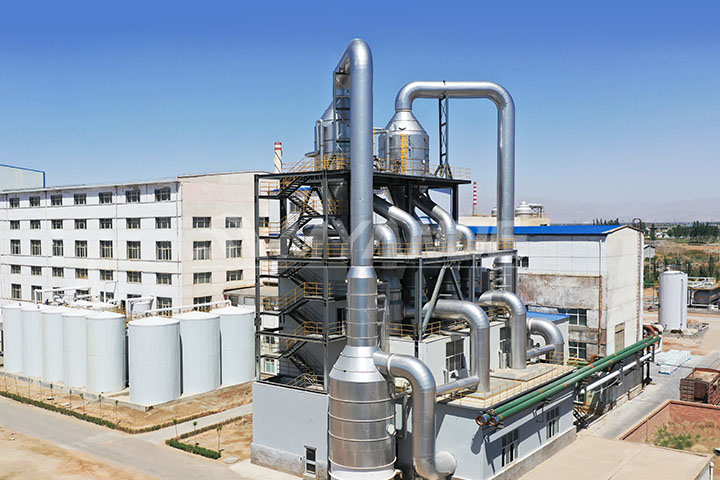
What Is MVR Evaporation Technology?
MVR (Mechanical Vapor Recompression) is an advanced evaporation process that compresses secondary steam and reuses it as a heating medium.
In simple terms:
👉 Wastewater is heated
👉 Water evaporates
👉 Vapor is compressed
👉 Heat is recycled
👉 Process continues in a closed loop
This mechanism allows the system to dramatically reduce external energy input.
Key idea:
Instead of continuously using fresh steam or fuel, MVR systems reuse energy internally, making the process highly efficient.
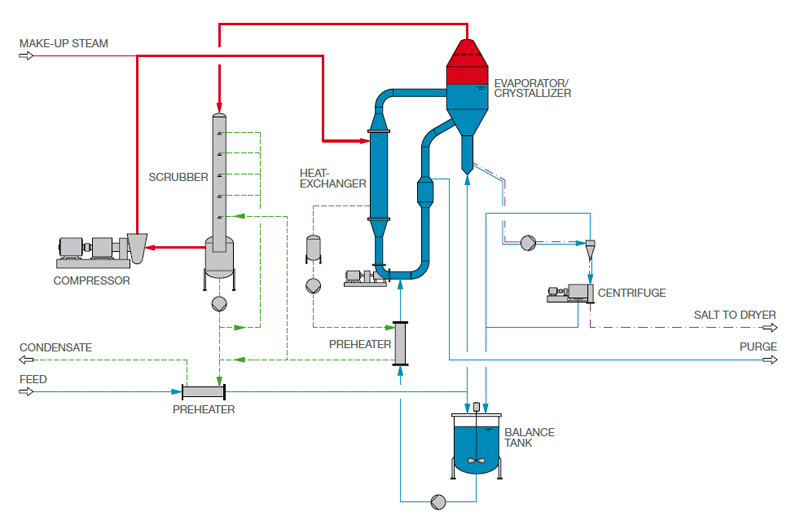
How the MVR System Works (Simplified Process Flow)
The working process can be understood in five stages:
Step 1 — Preheating
Wastewater enters the system and is preheated to optimal temperature.
Step 2 — Evaporation
Water begins to evaporate under controlled conditions.
Step 3 — Vapor Compression
Generated vapor is compressed using a mechanical compressor.
Step 4 — Heat Reuse
Compressed vapor is reused as a heating source.
Step 5 — Concentration & Discharge
Concentrated wastewater is discharged for further crystallization or drying.
💡 This closed-loop system is the reason MVR is considered one of the most energy-saving evaporation technologies.
Why Industries Prefer MVR Technology
MVR systems are widely used across industries because they solve three major problems:
🔹 High Energy Consumption
Traditional evaporation requires large amounts of steam or fuel.
🔹 Operational Cost Pressure
Energy cost often represents 40–70% of total operating cost.
🔹 Environmental Compliance
Strict discharge regulations require advanced treatment systems.
MVR directly addresses all three issues by:
● Reducing steam consumption
● Improving energy reuse efficiency
● Supporting zero liquid discharge (ZLD)
Comparison: MVR vs Traditional Evaporation
| Item | Traditional Evaporation | MVR System |
|---|---|---|
| Energy Source | External steam/fuel | Recycled vapor |
| Energy Consumption | High | Low |
| Operating Cost | High | 30–60% lower |
| Efficiency | Medium | High |
| Environmental Impact | Higher emissions | Lower emissions |
Industrial Applications
MVR evaporation technology is suitable for a wide range of industries:
● Chemical industry wastewater treatment
● Electroplating wastewater systems
● Lithium battery production wastewater
● Pharmaceutical wastewater processing
● Food and beverage wastewater
● High-salinity industrial wastewater
Each application benefits from its ability to handle complex wastewater with stable performance.
Advantages of MVR Evaporation Systems
🔹 Energy Saving Operation
The system recycles latent heat, reducing external energy demand significantly.
🔹 Stable Performance
Suitable for continuous 24/7 industrial operation.
🔹 High Automation Level
PLC control system ensures intelligent operation and monitoring.
🔹 Compact Design
Skid-mounted structure saves installation space and simplifies maintenance.
🔹 Flexible Integration
Can be combined with crystallization or drying systems for full ZLD solutions.
Ready to Start Your Project?
Get a customized industrial wastewater treatment solution from our engineering team.
Engineering Insight: Why MVR Is Not Just a Machine
Unlike simple equipment, an MVR system is a complete engineering solution.
Its performance depends on:
● Wastewater composition
● Boiling point elevation
● Heat transfer efficiency
● Compressor design
● System integration level
That is why customized engineering design is critical for each project.
When Should You Choose MVR Technology?
MVR is ideal when:
● Energy cost is a major concern
● Wastewater has high salinity or complexity
● Continuous industrial operation is required
● Zero liquid discharge is needed
● Long-term operational efficiency is a priority
Conclusion
MVR evaporation technology has become a key solution in modern industrial wastewater treatment due to its high efficiency, energy-saving characteristics, and adaptability to complex wastewater conditions.
As industries move toward stricter environmental standards and sustainable production, MVR systems will continue to play a central role in zero liquid discharge (ZLD) applications.
Call to Action
Looking for a customized MVR evaporation system for your industrial wastewater project?
👉 Contact our engineering team for a tailored ZLD solution
👉 Get a technical proposal based on your wastewater conditions
👉 Improve efficiency while reducing operating costs