
How to Choose Between Forced-Circulation and Natural-Circulation Evaporator? Principles, Differences, and a Selection Guide
For materials with low viscosity, low susceptibility to scaling, and where low capital investment and energy consumption are prioritized, a natural circulation evaporator is the preferred choice; for materials with high viscosity, susceptibility to scaling or crystallization, or where high concentration ratios and long-term stable operation are required, a forced circulation evaporator should be selected.The fundamental difference between the two lies in the circulation mechanism—natural circulation relies on the density difference (thermal siphon) generated when the feed liquid is heated to circulate on its own, while forced circulation is driven by an external circulation pump, with flow rates typically 2 to 10 times higher than those of natural circulation (depending on the specific natural circulation configuration). This article provides a detailed comparison covering operating principles, key differences, advantages and limitations, and typical applications, along with a three-step selection checklist and FAQs to help you make a quick decision.

Table of Contents
I. What Is a Natural Circulation Evaporator?
A natural circulation evaporator is an evaporation device that relies on density differences generated by the heat absorption of the feed liquid itself to achieve circulation, without the need for any mechanical drive mechanism. It is one of the longest-used and most widely employed types of equipment in industrial evaporation. Common configurations include externally heated, central circulation tube (standard), and suspended basket types.
How Does a Natural Circulation Evaporator Work?
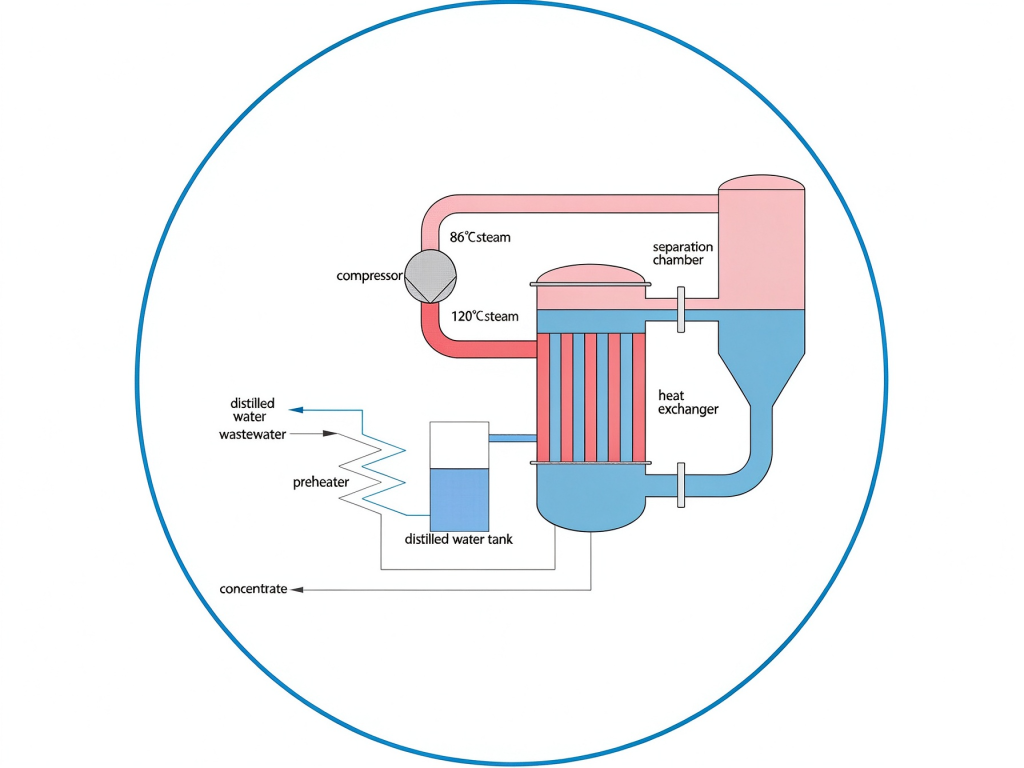
Its core operating principle is the “thermal siphon effect”: When the feed liquid inside the heating chamber’s tube bundle is heated by steam circulating between the tubes, the liquid near the tube walls boils first, producing a large number of bubbles and forming a gas-liquid mixture with very low density; meanwhile, the liquid in the circulation pipe is not directly heated and thus has a higher density. Driven by this density difference, the two liquid streams automatically form a continuous cycle: “rising within the heating tubes—gas-liquid separation in the separation chamber—descending through the circulation pipe back to the heating chamber.”
In engineering practice, due to structural limitations, the circulation velocity in the tubes of a central circulation tube evaporator is generally only 0.3–0.5 m/s; in an externally heated evaporator, the heating chamber and separation chamber are arranged separately, so the circulation tubes are not exposed to heat, resulting in greater circulation driving force and a flow velocity that can be increased to approximately 1.0–1.5 m/s.The circulation velocity directly determines heat transfer capacity and resistance to scaling, which is also the key to the applicable limits of natural circulation evaporators.
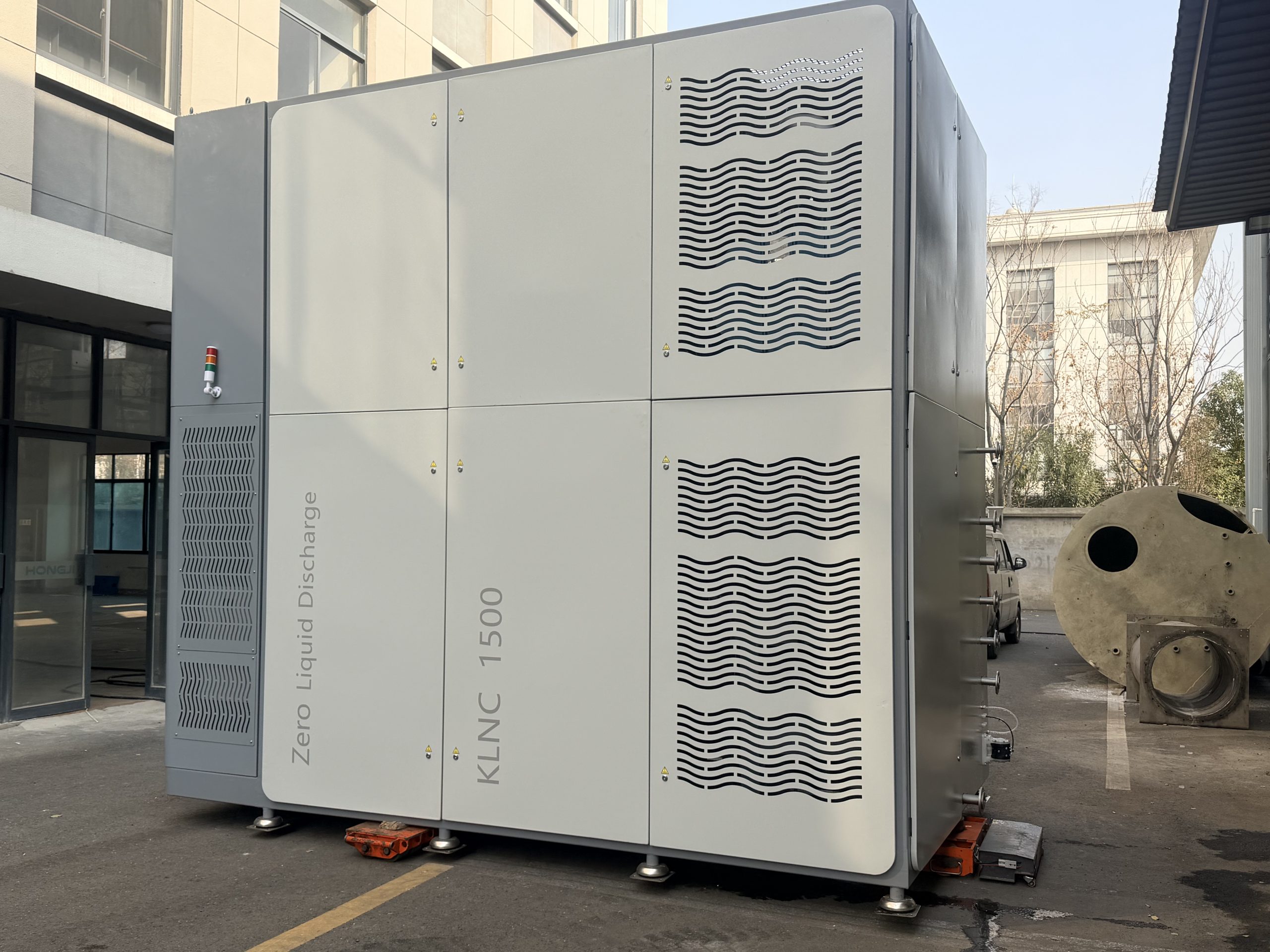
Core Components of a Natural Circulation Evaporator
A typical natural circulation evaporator consists of four major components:
1. Heating Chamber
A vertical shell-and-tube heat exchanger where steam condenses between the tubes, releasing heat; this serves as the source of heat required for evaporation;
2. Separation Chamber (Evaporation Chamber)
The gas-liquid mixture decelerates and flashes here, separating the secondary vapor from the concentrated liquid; a demister is typically installed at the top to reduce entrained mist;
3. Circulation Pipe/Central Circulation Pipe
Connects the separation chamber to the bottom of the heating chamber and, together with the heating tubes, forms the circulation loop; its cross-sectional design directly affects the circulation flow rate.
4. Steam Compressor
The core component of the MVR (Mechanical Vapor Recompression) system, which pressurizes and reheats secondary steam for reuse as a heating source; it is the key component enabling natural circulation evaporators to operate with low steam consumption and low operating costs.
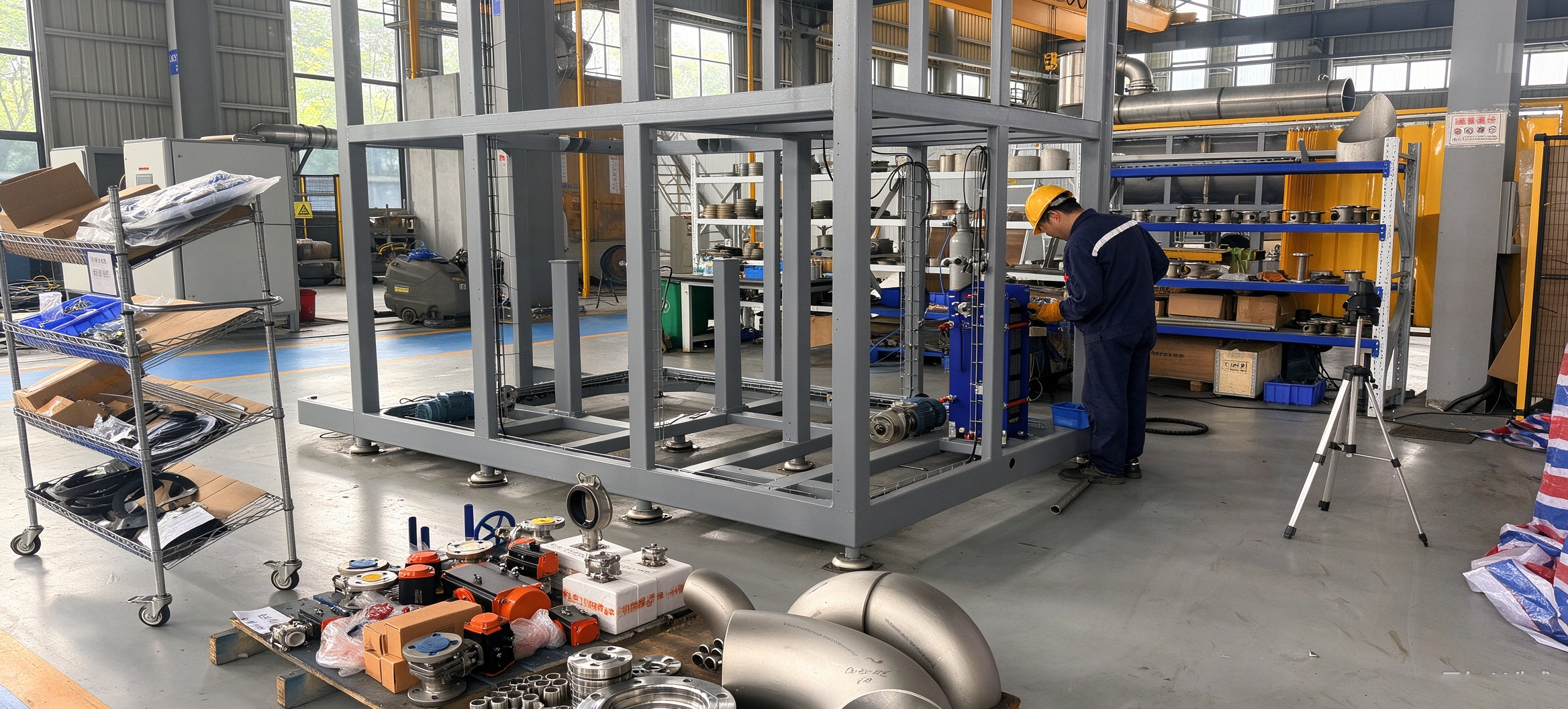
Steam compressors are primarily classified into two types based on their operating principles: Roots-type steam compressors use positive-displacement compression, featuring a simple structure and lower capital investment, making them suitable for applications with small to medium processing capacities; centrifugal steam compressors use dynamic compression, offering high single-unit flow rates and high efficiency, making them suitable for applications with large evaporation capacities.In MVR (Mechanical Vapor Recompression) evaporation systems—widely used in industries such as dairy, pharmaceuticals, and corn processing—the steam compressor pressurizes and heats secondary steam before reusing it as a heat source, thereby significantly reducing fresh steam consumption.
II.What Is a Forced-Circulation Evaporator?
A forced circulation evaporator is an evaporation device in which a circulation pump is connected in series within the circulation loop, and the feed liquid is circulated by mechanical power. It sacrifices some energy consumption and capital investment in exchange for full adaptability to high-viscosity, scale-prone, and crystallization-prone materials.
How does a forced circulation evaporator work?
A circulation pump (typically a low-head, high-flow axial-flow pump) drives the feed solution through the heat exchange tubes at a design flow rate of 2–3 m/s, which is 2 to 10 times the natural circulation flow rate.In engineering practice, the feed solution is typically maintained at a certain pressure within the heat exchange tubes so that it is heated but does not boil. When the superheated feed solution enters the separation chamber, it undergoes instantaneous flash evaporation due to a sudden drop in pressure. The secondary vapor is discharged from the top, while most of the concentrated solution returns to the heater via the recirculation pipe to continue the cycle.Since boiling is “relocated” to the separation chamber, the tendency for scaling and crystallization on the inner walls of the heat exchange tubes is significantly suppressed; this is the key to the forced-circulation evaporator’s ability to process high-salt and high-viscosity materials.
When high evaporation rates or high concentration ratios are required, forced-circulation evaporators are often combined with multi-effect evaporation or MVR technology to form hybrid evaporation systems that balance processing capacity and energy consumption.
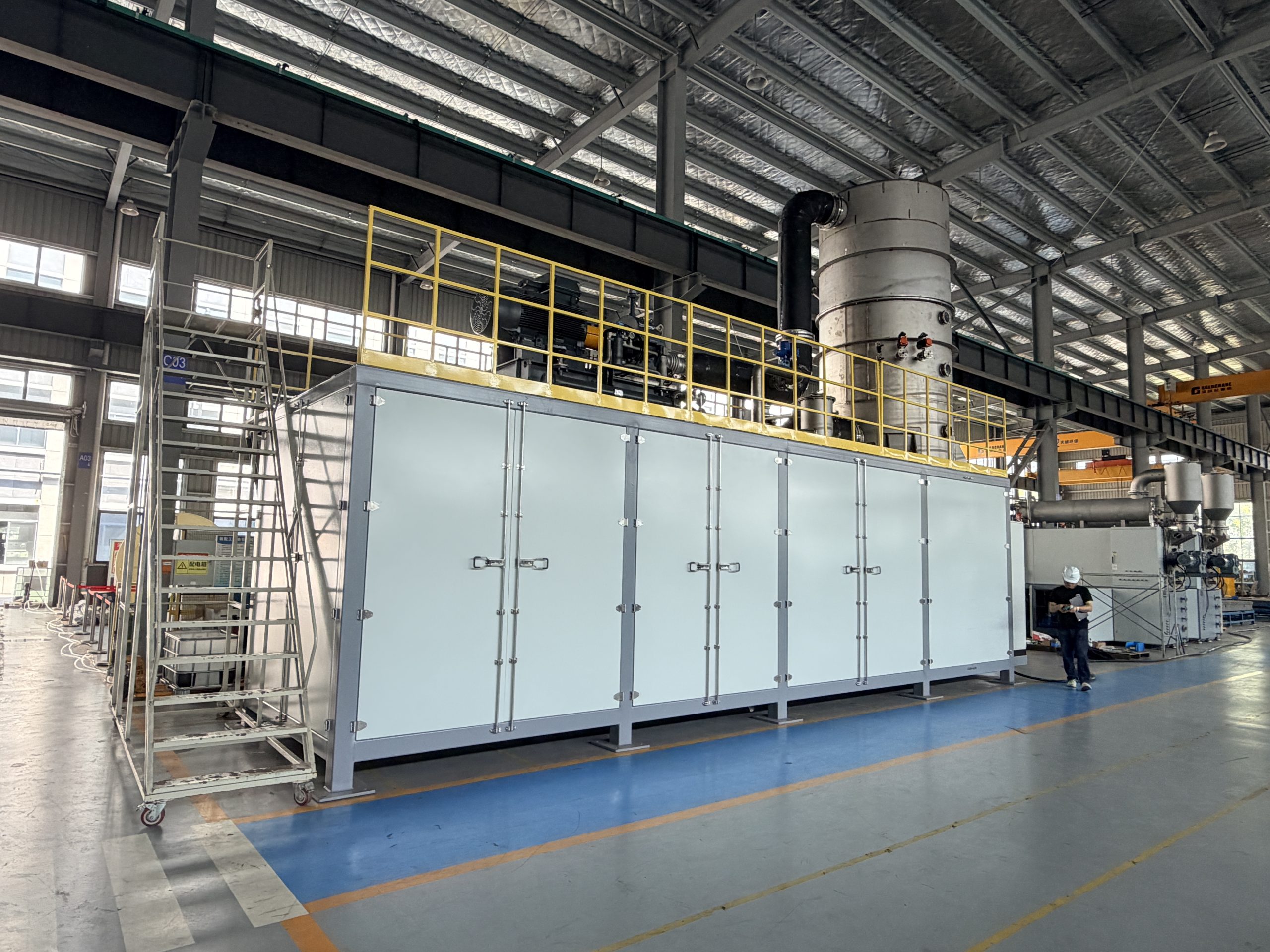
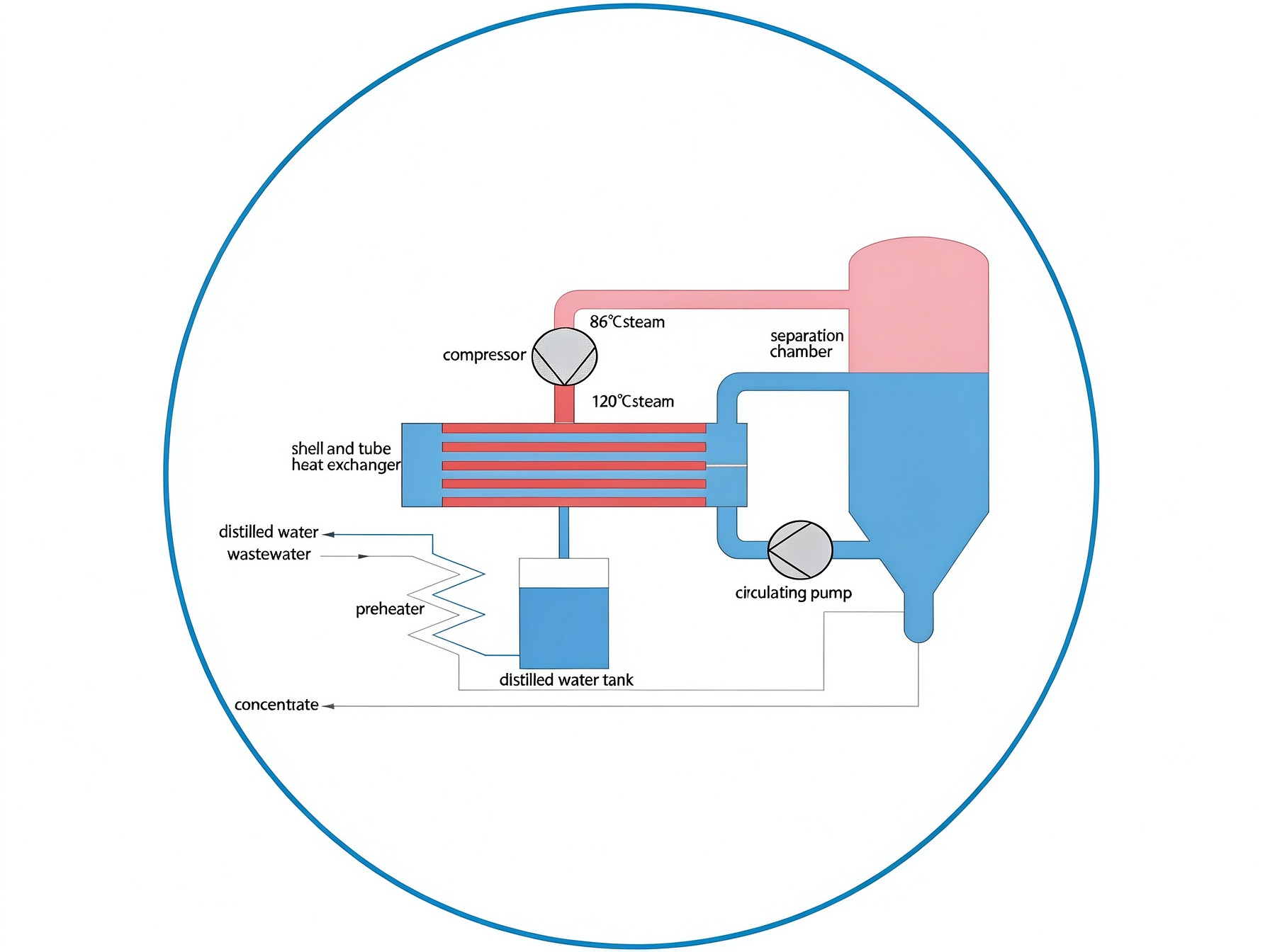
Core Components of a Forced-Circulation System
1. Circulation Pump
The “heart” of the entire system, selected based on circulation volume and head; it is a wear-prone rotating component and the primary maintenance focus of the forced circulation system;
2. Heater
A shell-and-tube or plate-type heat exchanger that provides superheated latent heat to the feed solution;
3. Separation Chamber (Flash Chamber)
The superheated feed solution flashes here, completing the vapor-liquid separation;
4. Steam Compressor
A key component in MVR configurations, it works in conjunction with the circulation pump to pressurize and heat secondary steam for reuse as a heating source; based on operating principle, it is classified into two types: Roots-type steam compressors (positive-displacement, suitable for small to medium processing capacities) and centrifugal steam compressors (rotary, suitable for large processing capacities).
5. Auxiliary systems
demisters, feed and discharge pumps, condensers, vacuum pumps, and control systems, etc.
III. Core Differences Between the Two Circulation Methods
Driving Force and Flow Velocity
Natural circulation is driven by density differences—it is “free” but limited; forced circulation is driven by circulation pumps—it is abundant but consumes electricity. In terms of flow velocity, natural circulation typically ranges from 0.3 to 1.5 m/s and is highly sensitive to changes in feed concentration and temperature differences; forced circulation is maintained at a stable 2 to 3 m/s and is virtually unaffected by fluctuations in operating conditions.
Heat Transfer Coefficient and Evaporation Performance
Differences in flow velocity are directly reflected in the heat transfer coefficient.In engineering design, the commonly used ranges are as follows: the overall heat transfer coefficient for natural circulation evaporators is approximately 580–2,300 W/(m²·K) (higher values apply to low-viscosity, clean feed solutions); for forced circulation evaporators, it can reach 2,300–5,800 W/(m²·K), and remains at a high level even when processing materials prone to scaling or crystallization.
Example: For a feed solution with an evaporation rate of W = 2,000 kg/h, assuming a latent heat of vaporization of secondary steam r′ ≈ 2,257 kJ/kg and an effective heat transfer temperature difference Δt = 20 °C, the heat load is:
Q = W × r′ = 2000 × 2257 = 4.51 × 10⁶ kJ/h ≈ 1254 kW
Calculated using the heat transfer area formula A = Q/(K·Δt):
- Natural circulation (K ≈ 1200 W/(m²·K)): A ≈ 1,254,000 / (1200 × 20) ≈ 52 m²
- Forced circulation (K ≈ 2300 W/(m²·K)): A ≈ 1,254,000 / (2300 × 20) ≈ 27 m²
For the same evaporation task, forced circulation requires approximately 48% less heat transfer area; conversely, for the same heat transfer area, evaporation capacity can be increased by approximately 90%. This is the quantitative basis for why forced circulation dominates in large-scale, high-concentration applications.
Energy Consumption and Operating Costs
In terms of steam consumption, a single-effect evaporation system typically consumes approximately 1.05–1.15 metric tons of heating steam to evaporate 1 metric ton of water; adopting multi-effect or MVR configurations can significantly reduce this figure.Electricity consumption marks the key distinction between the two: natural circulation evaporators do not require circulation pumps (or require only low-power auxiliary pumps), whereas forced circulation evaporators require continuous power supply for circulation pumps. Pump power depends on circulation volume and head; in industrial plants, this typically ranges from several kilowatts to tens of kilowatts per effect, constituting a recurring operating cost.Overall, the operating cost structure of natural circulation systems is dominated by electricity, with relatively low steam consumption; however, both electricity and steam consumption are lower than those of forced circulation systems. Forced circulation systems rely equally on steam and electricity, resulting in higher consumption, as well as additional costs for the maintenance and spare parts of rotating equipment.
Structure and Maintenance
Comparison Criteria | Natural Circulation Evaporator | Forced-Circulation Evaporator |
Circulation Mechanism | Density Difference (Thermal Siphon) | Circulation Pump (Axial Flow Pump) |
Flow velocity in the tube | 0.3–1.5 m/s | 2–3 m/s |
Total heat transfer coefficient W/(m²·K) | Approx. 580–2,300 | Approx. 2,300–5,800 |
Suitable viscosity | Low viscosity | Suitable for both low and high viscosities |
Resistance to scaling/crystallization | Weak | Strong (no boiling inside the pipe) |
Capital Cost | Low | Higher (pump + control system) |
Operating Costs | Low | Higher |
Cleaning Frequency | Frequent | Long cycle |
Adaptability to concentration fluctuations | Sensitive | Stable |
(The table shows values commonly used in engineering design)
IV. Advantages and Limitations of Each Type
Advantages and Limitations of Natural Circulation Evaporators
Advantages:
- Low capital investment: With no circulation pumps or complex control systems, equipment and installation costs are significantly lower than those of forced-circulation systems;
- Low energy consumption: No electricity consumption from circulation pumps;
- Simple maintenance: The entire unit contains no moving parts, resulting in a low failure rate and minimal maintenance requirements.
Limitations:
- Suitable only for raw water with low viscosity and low scaling tendency—as the viscosity of the feed solution increases or scaling begins, both the circulation driving force and the heat transfer coefficient decrease simultaneously, causing evaporation capacity to drop sharply;
- Sensitive to concentration fluctuations; the concentration ratio is limited; generally unsuitable for operating conditions where crystals precipitate during the final stages of evaporation.
Advantages and Limitations of Forced-Circulation Evaporators
Advantages:
- High material adaptability: Capable of handling high-viscosity, scale-prone, and crystal-containing materials; it is the primary equipment type for “challenging” applications such as high-salinity wastewater and crystalline salts;
- Stable heat transfer and high capacity: With constant flow velocity and a high heat transfer coefficient that does not significantly decline with increasing concentration, it is suitable for high concentration ratios and long-term continuous operation;
- Long cleaning intervals: Boiling is suppressed inside the tubes, scaling occurs slowly, and shutdowns for cleaning are infrequent.
Limitations:
- High Capital Investment and Power Consumption: Circulation pumps and control systems drive up initial investment costs, while the pumps’ power consumption contributes to ongoing operating expenses;
- Increased potential for rotating equipment failures: Components such as mechanical seals and impellers require regular maintenance, placing higher demands on operational and maintenance expertise.
Summary: Natural circulation excels in “cost savings,” while forced circulation excels in “stability” and “versatility.”
V. Typical Application Scenarios
Ideal Applications for Natural Circulation Evaporators
Natural circulation evaporators excel in applications involving low-viscosity, low-scaling-prone wastewater—such as cleaning wastewater, machining wastewater, semiconductor wastewater, surface treatment wastewater, electroplating wastewater, and dilute salt solutions—where the total treatment volume is moderate. They are particularly common in manufacturing industries with relatively low wastewater generation.
Ideal Applications for Forced-Circulation Evaporators
Materials prone to scaling and crystallization—such as high-salt wastewater, crystallizing salts, and high-viscosity extraction liquids—are areas where forced-circulation evaporators are indispensable. They are commonly used in chemical production and Zero Liquid Discharge (ZLD) projects.A typical example is the combined process of “pretreatment + final-stage forced-circulation crystallization” for high-salt wastewater evaporation and crystallization: for large water volumes with low salt concentrations, a falling-film evaporator can handle the high evaporation rate, while the final stage uses forced circulation to complete crystallization and concentration, balancing energy consumption and reliability.
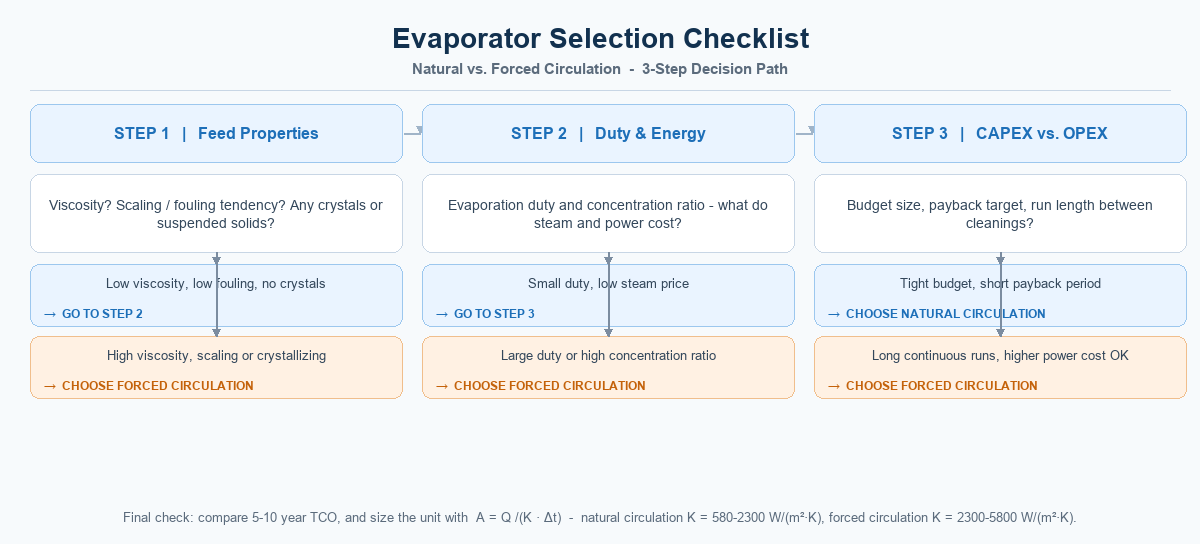
Practical Selection Checklist
Step 1: Examine feed characteristics.
Verify each item, including viscosity range, scaling tendency, and whether the feed contains crystals or suspended solids. If the feed is low in viscosity and clean, consider natural circulation; if it is high in viscosity, prone to scaling, or contains crystals, consider forced circulation directly.
Step 2: Compare processing capacity and energy objectives.
For high processing capacities or high concentration ratios, forced circulation—due to its high heat transfer coefficient—can significantly reduce heat transfer area and the number of units required, making it more economical in the long term (see the calculation example above: heat transfer area reduced by approximately 48%); For small processing capacities and low steam prices, the lower capital investment of natural circulation is often more attractive. Whether to incorporate MVR or multi-effect systems depends on the project’s energy costs and emissions targets.
Step 3: Balance capital expenditures and operating expenses.
Projects with limited budgets and short payback periods tend to favor natural circulation; projects seeking long-term stable operation and willing to accept higher electricity consumption tend to favor forced circulation. It is recommended to calculate the total cost of ownership (TCO) over a 5- to 10-year period before finalizing the decision.
VI. Frequently Asked Questions (FAQ)
Q1: What is the key difference between forced circulation and natural circulation?
Different driving forces: Natural circulation relies on density differences (thermosiphon) for self-circulation, with flow rates of 0.3–1.5 m/s; forced circulation is driven by a circulation pump, with flow rates of 2–3 m/s, offering stronger heat transfer and better resistance to scaling.
Q2: How do I determine if my operating conditions require forced circulation?
For applications involving high-viscosity materials, those prone to scaling or crystallization (such as high-salt wastewater or crystallization concentration), or those requiring high concentration ratios and long-term continuous operation, forced circulation must be selected.
Q3: What are the cleaning cycles for each type of equipment?
It depends on the scaling tendency of the material: In natural circulation systems, cleaning is typically performed every few days to two weeks; in forced circulation systems, since there is no boiling inside the pipes and scaling occurs more slowly, the cleaning interval can be several weeks or even longer.
Q4: What happens if the feed concentration fluctuates significantly?
Natural circulation is sensitive to fluctuations: increased concentration leads to higher viscosity, reduced circulation driving force, and deteriorated heat transfer; in severe cases, this can trigger flow instability such as flow oscillations. Forced circulation operates at a constant flow rate driven by a pump, so its performance is largely unaffected by fluctuations.
Q5: Can the two types of equipment be converted into one another through retrofitting?
One-way conversion is possible: An externally heated natural circulation system can be upgraded to forced circulation by installing a circulation pump; however, reverse conversion is generally not feasible due to limitations in flow velocity and structural design.
Conclusion
Choosing between natural and forced circulation is essentially a comprehensive evaluation of “material properties + operational objectives”: For low-viscosity feed solutions that are not prone to scaling, natural circulation is preferred, offering low investment, low energy consumption, and low maintenance; for high-viscosity feed solutions that are prone to scaling or crystallization, or where high concentration ratios and long-term stable operation are required, forced circulation is the indispensable solution.We recommend checking each item on the three-step selection checklist provided in this article and performing a quantitative analysis of “evaporation capacity—steam consumption—heat transfer area” for the candidate solutions.
If your project involves specific operating conditions such as zero discharge of high-salinity wastewater, waste liquid concentration, or food concentration, please feel free to contact us for one-on-one evaporator selection and process calculation solutions.